- Home
- Blog Page
Accountable Citizens Updates
The Accountable Citizens Update page gives you all the new content in a centrally located spot, including some columns from guest authors.
Click on that orange button to subscribe to our RSS feed.
The Spirit Of 9-11. A Profile Of Courage, A Lesson In Citizenship.
History is essential for presenting facts, dispelling falsehoods, and guiding the future. Author T.O. Illustratio offers the importance of the spirit of 9-11.
Continue reading "The Spirit Of 9-11. A Profile Of Courage, A Lesson In Citizenship."
Understanding The Birthright Citizenship Debate Is A Listening Lesson
Understanding the birthright citizenship debate will require all the listening skills and clear thinking the adults in the room can muster.
Continue reading "Understanding The Birthright Citizenship Debate Is A Listening Lesson"
How To Be More Responsible. The Gateway To Accountability.
Follow this blueprint describing how to be more responsible as an accountable citizen and a visionary leader.
Continue reading "How To Be More Responsible. The Gateway To Accountability. "
Best Words Of Affirmation for Different Situations
Learn from my own experiences how words of affirmation can help people if those words are used effectively.
Continue reading "Best Words Of Affirmation for Different Situations "
"The Art Of Niceness"
Growing up in Michigan, I was fortunate to be able to read the Detroit Free Press. The "Freep" always had excellent columnists. That tradition continues to this day. Mitch Albom is one of their sportswriters now, but his impactful writing skills go beyond games and tournaments. He's an accomplished author who always seems to strike a unique chord with his work.
A few days ago Mitch posted a column about the death of Dolly Parton. There were countless stories both in written and video form and the ones I saw were poignant and personal. But this one from Mitch Albom was different. It was a cut above, which is the norm for this Free Press writer.
He related a story of niceness and lasting legacy, which described Dolly Parton as well as anyone could. His story was one of simple kindness, and of being being a very nice person. Dolly Parton was a magnanimous philanthropist. She donated millions of dollars to those in need. She was nice to everyone, nice when no one was looking, nice even when some weren't the same to her.
I've included the link to Mitch Albom's column at the end of this page. But before you go there, consider these two closing thoughts.
Mitch's column and the mesmerizing recent post we shared from T.O. Illustratio reminded me of a young lady on our service team. She joined us as a high school freshman and is now in college. From day one, she modeled kindness to everyone. It wasn't show and it wasn't to be applauded. She was, and is a nice person. She's nice to people who criticize our team for going on to the front lines where people need help the most. She's nice to new people who join us and those who aren't sure of their place in life yet.
Medical breakthroughs are vital to improving the lives of citizens. New inventions are what has driven our country since it's inception. Vision and leadership are guiding principles.
But the bedrock character traits, the human strength that guides every positive action, every needed change traces back in some way to kindness and being nice to people. The link to T.O. Illustratio's post is also included below the last sentence.
Being nice, being kind are traits to be placed at the top of every goal list.
What Do You Want To Be Remembered For As You Look Back On Your Life?
A gripping tale of transformation as Don recognizes he was asking the wrong question. What do you want to be remembered for? That was the important question.
Continue reading "What Do You Want To Be Remembered For As You Look Back On Your Life?"
Is The Electoral College Still Necessary? Two Viewpoints To Consider.
Is the Electoral College still necessary? In this page, we'll offer both viewpoints along with a question. Are we just chasing symptoms?
Continue reading "Is The Electoral College Still Necessary? Two Viewpoints To Consider."
Why Is Equality Important In A Free Society?
Guest author T.O. Illustratio offers an insightful look into the question, "Why is equality important?" The author also describes how the concept is abused.
Continue reading "Why Is Equality Important In A Free Society?"
The Paradox Of Tolerance and The Advice Of "The Cheshire Cat"
With every right comes a corresponding responsibility. The paradox of tolerance is that responsibility is often exchanged for arrogance or apathy.
Continue reading "The Paradox Of Tolerance and The Advice Of "The Cheshire Cat""
What Is A Republic?
In this page we're focusing on that important phrase, "And to the republic for which it stands..." But what is a republic? Is it the same thing as a democracy? We hear both words bantered about, so are they basically the same thing?
It does matter. It's important to know the difference and to recognize the insight that went into the original work of the Framers of the Constitution. History matters. The Framers seemed to have an astute vision as they wrote those documents that would shape our nation. They seemed to understand human nature and human failings, including their own as they looked into the future of how America would evolve.
The theory of democracy is that the citizens will vote on every law and decision. By contrast, the theory of a republic is that the citizens vote for representatives who will make decisions and laws to guide the nation. The same citizens can remove those elected representatives in subsequent elections.
They took the best part of the theory of democracy, that being the idea that the people would vote on how they wished to be governed, and every citizen would have a chance to vote and to have their say. Now, some reading this will interject that not everyone was granted such rights. This is true. Back to those human failings.
The Framers also saw the pitfalls of this absolute theory of democracy. It would be impossible to make every decision, every action the result of a national vote. So they took part of that definition of a republic and intertwined it with the best parts of the democracy theory. Our nation would allow for citizens to run for office as elected officials to make important decisions, and there would be a separation of powers to provide a check and balance safeguard. We could and will write pages about the Electoral College and the Supreme Court, both part of those safeguards. Understanding of both topics is on par with understanding our unique republic form of government.
The Framers recognized another key flaw in the pure theory of democracy. If majority always rules, those in the minority could have all rights removed, forcefully or otherwise. A simple majority could decide to strip away every right of any segment of society deemed as without value, deplorable, or unnecessary. Congress could pass any law if a simple majority was enough. This is why we have that Bill of Rights and parts of the Constitution that state, "Congress shall make no law..."
Our version of a republic takes the best of both theories and combines them to work for everyone. We screw up at times. We have setbacks, but that hybrid form of government is what sets us apart from the world. This republic is built on the rights of individual citizens, the rule of law voted on by representatives of those citizens, and the opportunity provided by the republic.
Why Do We Learn History? Because It Always Determines Our Future!
Why do we learn history? Because the past always offers an accurate prediction of our future as described in the words of guest author T.O. Illustratio.
Continue reading "Why Do We Learn History? Because It Always Determines Our Future!"
Reprinting The Thirty Day Challenge
(Editor's note: We're reprinting a column from two months ago to give some context to a reader reply that is featured just below this post in the blog lineup,)
What can I do today to be of service? Try this experiment for thirty days. If it fails, use the contact button located in the right margin of every page to report the failure and I'll publicly admit that I don't know what I'm writing about.
For the next thirty days, take some quiet moments of mindfulness to center everything and then ask yourself, "What can I do today to be of service?" Speaking or in this case, writing from personal experience, something almost magical, absolutely transformational will occur.
Our minds are amazing creations. If we give them a defined task, they will solve for an answer. It doesn't matter who is reading this, where they are living, there are literally dozens of ways you can be of service. If anyone reading this questions why they should bother, I have another promise for you. You will get back more than you give. No exceptions to that last sentence, no caveats, no doubts. It is etched in stone.
Maybe it's volunteering in a senior center, in a pregnancy support center, or in civic initiatives? Maybe it's a simple check in on a lonely neighbor?
We did this every day for three years for an elderly woman who had no family and no way of getting out. Until she got really sick, we would pick her up for a drive and some ice cream, or just sit with her as she watched Bob Ross paint or the latest episode of "Blue Bloods." Every day for three years and it was worth every second.
Wherever you live there are shelters for homeless people not far away from you. I suppose if you are in a remote area, you might not have such a place nearby, but you have the ability to support them financially.
Regular readers know that we have a team of high school and college students who are on the front lines, supporting people in need. They are right in the middle of the work.
In our next installment we'll write about some things happening nationally that are affecting charities and service organizations. Ask yourself every morning, "What can I do today to be of service?" It has never been more important.
Take the thirty day challenge. Ask yourself every morning what you can do today and then let your mind and heart direct you. You'll always get back more than you give.
Take the challenge and let us know how it works out!
The Thirty Day Challenge Took Me Sixty Days
(Editor's note: This is a reader response from a past posting. To provide better context, we'll re-post that page in this spot tomorrow) I've written
Continue reading "The Thirty Day Challenge Took Me Sixty Days "
The Ties That Bind
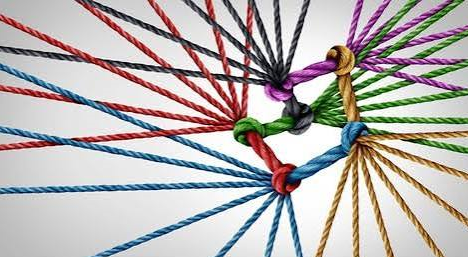
The ties that bind are virtually unbreakable, even when tested against seemingly insurmountable odds. The ties that bind, are not to be confused with songs, books, and shows using similar titles, although the message in all three backs up that opening sentence.
What gives these simple ties such strength, such resilience, such tenacity? The source of this power comes from combined forces woven together to create a force beyond defeat. Oh, there have been points in history when the perceived collaboration was tested, and the outcome in doubt, the prospects dim.
Those ties that bind have been frayed by evil forces attacking from the outside, and from fear and doubt weakening the ties from within. The components of this woven sinew of strength include courage, kindness, patience, respect for humanity, desire to improve the quality of life throughout the world, integrity, honesty, faith, all bound together in those ties that bind.
Those ties that bind reach from one person to another to lift them out of depression. Those ties appear as nations bonding together to stop hostile aggression, even if they could remain clear of the battle. For surely, if one act of evil, from nations or criminals is ignored, our turn to face it could be coming soon. Apathy and fear, selfishness and hatred, all tear away at the ties that bind, and if allowed to grow, can develop into a terminal condition for free society.
Humankind has faced up to evil and greed. Sometimes it took a while, sometimes the ties that bind were stretched, but mostly they've held. They've done so because the next generations have always added their particular strengths including courage, integrity, kindness, respect for humanity, and faith.
The formula remains the same now as it has for centuries. The ties that bind are woven from the combined will of conscientious, courageous citizens.
Written by T.O. Illustratio
There Has Never Been A Better Opportunity for An Up and Coming Leader
Challenges always bring occasion for new success. There has never been a better opportunity for new leaders to emerge in America.
Continue reading "There Has Never Been A Better Opportunity for An Up and Coming Leader"
Have A Great Story Or Opinion About This Topic?
Do you have a great story or opinion about this? Share it!
Recent Articles


-
The Spirit Of 9-11. A Profile Of Courage, A Lesson In Citizenship.
Sep 14, 26 09:21 AM
History is essential for presenting facts, dispelling falsehoods, and guiding the future. Author T.O. Illustratio offers the importance of the spirit of 9-11. -
Understanding The Birthright Citizenship Debate Is A Listening Lesson
Sep 11, 26 02:19 PM
Understanding the birthright citizenship debate will require all the listening skills and clear thinking the adults in the room can muster. -
How To Be More Responsible. The Gateway To Accountability.
Sep 10, 26 08:02 AM
Follow this blueprint describing how to be more responsible as an accountable citizen and a visionary leader.
Something to Think About
"Avoid head trash. Don't be a garbage can for anything that does not feed your intellect, stimulate your imagination, or make you a more compassionate peaceful person. Refuse to open your mind to other people's trash. Tune out anything that promotes conflict or controversy. This can infect you with a mind virus of cynicism or defeat, and you won't even know it!."
Les Brown