Life Is Not Always Fair. We All Get To Decide If We Complain Or Contribute.
Life is not always fair. No debate there. Humans have become remarkably adept at inflicting pain and suffering on each other. Sometimes it's through direct violence, sometimes through more sinister, more veiled discrimination, and sometimes it's simply by being leeches on society, crying out for a free ride because they don't want to do the work.
Example is the best teacher and this is the next segment in our series about leaving things better than we found them. Our most recent installment was about the wisdom of Thomas Sowell. In every example we'll present, there is one common thread. Yeah, life isn't always fair. So what? Get over it and do something about it.
Two Examples Who Left Things Better Than They Found Them
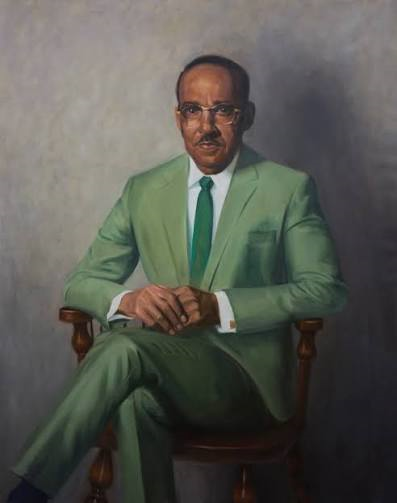
Vivian Thomas offers an amazing story of accomplishment, even in the face of difficulty. He faced an uphill battle with the establishment cards clearly stacked against him. He had to climb out of the cycle of poverty, then endure more financial and personal setbacks during the Great Depression.
There would be no quit, no resignation of the randomness of fate. Vivian Thomas would just start again and keep working. Because of his determination to make a way for himself and provide for his family, many Americans would benefit.
His heartfelt desire was to become a doctor. Putting to use the work ethic instilled by his father, Vivian Thomas worked in construction jobs, saving all he could from his menial salary. One of those jobs included working at Vanderbilt University. His official title was janitor, but over time his role at the university would expand.
He would eventually secure a position as a research assistant to well-known surgeon, Dr. Alfred Blaylock. Their efforts led to breakthroughs in the treatment of severe trauma suffered by soldiers in World War II. They would also branch into important improvement in the area of cardiac health, going against the period-held reluctance to operate on human hearts.
Dr. Blaylock would take a position as Chief of Surgery at Johns Hopkins University and brought Vivian Thomas along as his research assistant. This would lead to the discovery of a procedure to repair what was commonly known as and usually fatal "blue baby syndrome." This condition restricted blood flow to the lungs.
Despite no formal medical training, but years of hands on experience, Vivian Thomas was charged with creating a similar condition in animals and fixing the condition. Dr. Blaylock would describe the procedure created by Vivian Thomas as "This looks like something the Lord made."
The next step was to use this breaking skill on a human. There were no instruments available at the time for this type of operation, so Vivian Thomas made them.
Dr. Blaylock had never performed this operation, but Mr. Thomas had done so, many times on research animals. So he stood on a stool and coached this renowned surgeon through the process which in 1945 would be featured in the Journal of the American Medical Association. As another sign of the times, Vivian Thomas would receive no credit in this article. That wasn't fair. Life is not always fair. But his work made things better than he found them.
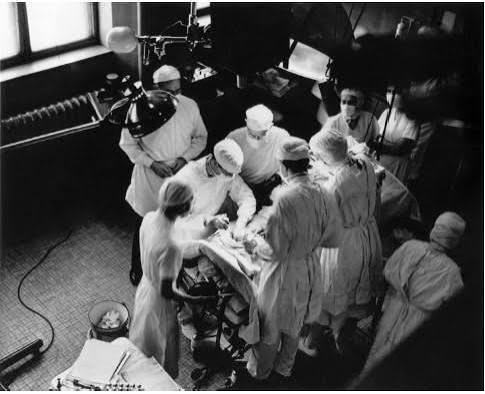
Eventually Vivian Thomas would become a teacher of other complex surgical skills and a mentor to other lab assistants of that time. He never received the pay grade of the surgeons he trained until Dr. Blaylock intervened on his behalf. Vivian Thomas would eventually become the highest paid lab assistant at Johns Hopkins, although full recognition of his skills took many more years to come to light.
Vivian Thomas' contributions to training lab assistants and surgeons has had an enduring legacy. So to should his example of overcoming barriers through determination and personal integrity.
Life Is Not Always Fair. What Will You Do To Fix It?
Early on, Katherine Johnson was a gifted mathematician. She just had the knack for solving even the most difficult equations. But in 1930's America, there were obstacles placed in front of some citizens. Katherine Johnson would be faced with two of them.
She could have given up, she could have shrunk back into the shadows of obscurity or she could have bemoaned the unfairness of her circumstances. Life is not always fair. But she didn't knuckle under and America is far better because of her tenacity, her skill, and her example.
Along with Dorothy Vaughn and Mary Johnson, she would become what was described as "human computers." Her immense skills would take her to the National Advisory Committee for Aeronautics. Her tenacity would soon align with her skills as she set her own course, in spite of the obstacles. Check out this fairly long quote.
"At first she [Johnson] worked in a pool of women performing mathematical calculations. Katherine has referred to the women in the pool as virtual 'computers who wore skirts'. Their main job was to read the data from the plane's black boxes and carry out other precise mathematical tasks.
Then one day, Katherine (and a colleague) were temporarily assigned to help the all-male flight research team. Katherine's knowledge of analytic geometry helped make quick allies of male bosses and colleagues to the extent that 'they forgot to return me to the pool'. While the racial and gender barriers were always there, Katherine ignored them. Katherine was assertive, asking to be included in editorial meetings (where no women had gone before). She simply told people she had done the work and that she belonged."
NASA, which would supersede the formally known NACA would eventually eliminate the racially segregated sections, although discrimination still existed. In her determined manner Katherine Johnson would state she, "didn't feel the segregation at NASA, because everybody there was doing research. You had a mission and you worked on it, and it was important to you to do your job … and play bridge at lunch." She added: "I didn't feel any segregation. I knew it was there, but I didn't feel it."
She would approach her role as a female researcher in the same manner. "We needed to be assertive as women in those days—assertive and aggressive—and the degree to which we had to be that way depended on where you were. I had to be. In the early days of NASA women were not allowed to put their names on the reports—no woman in my division had had her name on a report. I was working with Ted Skopinski and he wanted to leave and go to Houston … but Henry Pearson, our supervisor—he was not a fan of women—kept pushing him to finish the report we were working on. Finally, Ted told him, 'Katherine should finish the report, she's done most of the work anyway.' So Ted left Pearson with no choice; I finished the report and my name went on it, and that was the first time a woman in our division had her name on something."
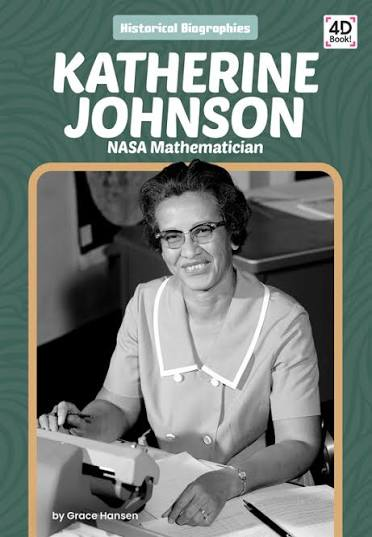
Her contributions to space exploration and more importantly to safeguarding the astronauts would leave a lasting legacy. She not only calculated their flight trajectories, she also created back up plans in case of system failure to protect the astronauts. John Glenn specifically asked for Katherine Johnson to verify all calculations before he became the first American to orbit the Earth.
Her innovations in back up safety would be immeasurably valuable when Apollo 13 needed to abort their mission. Her precise pre-planning was vital in their safe return from space. She said, "Everybody was concerned about them getting there. We were concerned about them getting back."
Her career at NASA spanned the early Mercury program all the way to the Space Shuttle missions. Katherine Johnson remains a lasting example of overcoming the obstacles to raise the accountability bar. Life is not always fair, but in America, the opportunity is there to leave things better than we found them.
Recent Articles


-
The Spirit Of 9-11. A Profile Of Courage, A Lesson In Citizenship.
Sep 14, 26 09:21 AM
History is essential for presenting facts, dispelling falsehoods, and guiding the future. Author T.O. Illustratio offers the importance of the spirit of 9-11. -
Understanding The Birthright Citizenship Debate Is A Listening Lesson
Sep 11, 26 02:19 PM
Understanding the birthright citizenship debate will require all the listening skills and clear thinking the adults in the room can muster. -
How To Be More Responsible. The Gateway To Accountability.
Sep 10, 26 08:02 AM
Follow this blueprint describing how to be more responsible as an accountable citizen and a visionary leader.
Something to Think About
"Avoid head trash. Don't be a garbage can for anything that does not feed your intellect, stimulate your imagination, or make you a more compassionate peaceful person. Refuse to open your mind to other people's trash. Tune out anything that promotes conflict or controversy. This can infect you with a mind virus of cynicism or defeat, and you won't even know it!."
Les Brown